
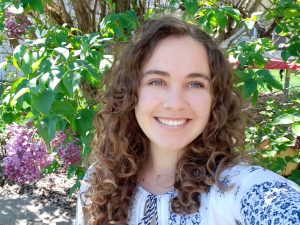
Name: Teia Wheeler
From: Logan, UT
Votes: 0
Basic Steps Bring Great Outcomes
Basic Steps Bring Great Outcomes
When I was young, car rides were a highlight of my day. Being able to look out the window and make up stories about fairies or super-heroes flying by my window thrilled me. Many times, a car ride meant that my mom and I were going to Build-a-Bear. I’ll never forget the time that my mom, my grandma, and I were going to Build-a-Bear in Anaheim, California. The traffic was very heavy and about five miles away from our destination and the freeway had all come to a stop due to an accident. Then, all of the sudden, there was this loud, deep scream coming at us from behind. Time moved slowly. I heard what sounded like a pop can being crumpled not once, but two times. Then our car was hit. A family visiting from France was going to Disneyland. The father was driving a rental SUV and had looked down to assess the map, unconscious of the traffic around him. By the time he looked up it was too late. It was a four-car pile-up; the rental was damaged, two cars were undrivable, and our bumper was pushed into the car. Miraculously, no one was physically hurt, and we were able to walk away from the crash. Unfortunately, not all cases are like this.
Whatever the reason why someone got in a car crash, it is devastating to all parties. Damage to cars pales in comparison to lives lost. That is why it is imperative that Drivers Education is taught. It doesn’t matter if the student is enrolled in their High School Drivers Education class, if they are learning at a driving school, or if they are learning at a DMV; what matters is that the individual is coming to learn the rules of the road and the techniques of being a safe and defensive driver. It is important that a student comes to know that they aren’t the only drivers on the road, that there are other people’s lives at stake. Through Drivers Education courses, they learn how to watch out for others around them, drive defensively, and learn about the responsibility they have as a licensed driver. More lives could be saved if the practices taught in Drivers Education were used; mainly being aware of your surroundings, driving within the speed limit, and using signals.
Being aware of your surroundings is more than just looking at the things around you. It is actively looking at the road in front of you, other drivers, and assessing how you should drive. It’s a really basic principle but look ahead where the car is going to go. The phone and any text message can wait. The drink that just spilled can be cleaned up later. If the situation requires more attention, the driver can pull over to the side of the road or get on the off ramp and park somewhere safe. It is about having that attention on driving that will keep more people safe whether you are merging into traffic, turning onto a road, going down a road, or exiting traffic. A critical lesson to learn is that wherever your eyes are looking at, that is going to be where you will end up. It is also important to be aware of what is going on outside of the car. Road construction, trucks, stop lights, the other drivers, and pedestrians are just a couple examples. Many times, there are signs indicating if construction is in process and if a lane or road will be closed. At major intersections, stop lights will direct traffic. It’s a pretty basic concept to follow the signal: green means go, yellow means clear the intersection, and red means stop. There’s this interesting instance, though, that many drivers still enter the intersection when the light is yellow. In Drivers Education, students learn that there is a marker of knowing if you can enter the intersection called “The Point of No Return”. It is at this point that many speed through the light and crashes occur. It can be with another car or a pedestrian; and that is another loss. That is another family member’s, friend’s, and co-worker’s life at stake. The best course of action is to watch for signs and follow the signs instruction; especially the speed limit signs.
Different roads have different speeds, not only to protect the driver, but also the pedestrians (if there are any pedestrians or cross walks around). Research has gone into understanding what speed limits are safe for different areas. A simple glance at the odometer and correction if they are going too fast or too slow can greatly impact the chance that another person gets to go home that day. There can be more lives protected as speed limits are followed. When the weather changes, and road conditions become more precarious, drivers are to slow down to account for wet roads, icy roads, and/or decreased visibility. One prime example of this was when my brother was driving his girlfriend and I home from school. We were living in Utah at the time, and it was November and it had been snowing this type of slushy snow all day. The freeways were just getting cleared, when my brother decided to take the back roads that had not been cleared off. My brother took a tight corner going the normal speed limit. We felt the tires slide on top of the slushy snow, and we collided with the cement road divider. There was this huge pop sound and later we learned that the axle had been broken. Different weather means that drivers need a different, slower speed in order to drive safely. Speed limits aren’t suggestions, they are the law. There is safety not just for the driver, but passengers and pedestrians in following the law.
I remember when I took Driver’s Education that a lot of driving is about being observant and communicating with other drivers via blinker signals. It seemed like a piece of cake and that signaling wouldn’t be much of a problem. Now as a driver of four years, I have been shocked at how many drivers do not use their blinkers and sometimes I have been a culprit. It is easy to become distracted with the scenery and what others are doing that the blinker is completely forgotten. The blinker is there for a reason; and whenever a lane change is coming up, use it to the best of its abilities.
When it comes down to it, the things that can help me and others be safer on the road is to apply what we’ve learned in Drivers Education and respect the laws of the road. Instead of making jokes or getting mad at driving rules, all drivers (including myself) could talk about the importance of driving safely. Make it a part of our day and share it with those who are just learning and those who have been driving for a long time. Repetition is a great teacher, and it’s best when the right information is repeated. It’s about creating a culture of respecting the rules and doing one’s best to promote the benefits. It’s about being observant, following the rules taught in Drivers Education, and being a safe driver. It is by taking basic steps that great outcomes can be achieved.
