
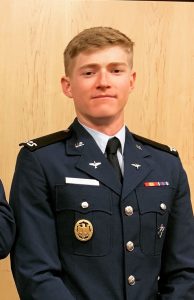
Name: Brennan Thompson
From: Orem, UT
Votes: 0
Driving Safely: It’s in Your Hands
Driving Safely: It’s in Your Hands
1.What is the importance of driver education in reducing the number deaths as a result of driving?
As a cadet involved in pilot training at the United States Air Force Academy, I am often asked by friends and family, “how much different is flying a plane from driving a car?” This seems like a silly question, but I believe that the basic principles, whether flying or driving, are the same: knowing your vehicle, the rules of the road, and understanding the responsibility you take on when you step into the driver’s seat. When these three principles are mastered, the person behind the wheel is able to get to their destination both safely and confidently. This is the importance of training and education in the process of learning to pilot a vehicle. All three elements are taught in driver education and allow the student the opportunity to set a strong foundation that, if built upon, will prevent harm from befalling them, their passengers, and others on the road. Failure to grasp proper motor skills, driving laws, or most importantly how dangerous driving a car really is, can have devastating consequences. As harsh as it may sound, ultimately it is our responsibility, as the driver, if people live or die out on the road. Students have to understand this. They have to understand that driving isn’t just a way to get around with our friends on the weekend. Driver education offers the new driver the opportunity to learn this, and to lead a life of safe driving that will ensure the well-being of both themselves and their community.
2.What steps can be taken to reduce the number of deaths related to driving?
I have found learning to fly an airplane in the Air Force reminiscent of my time learning to drive, though I think my instructor pilots are more relaxed about me at the wheel than my mother was. The biggest difference I’ve found is just how seriously pilot training takes the dangers of flying. Close to half of my flight manual for my simple training glider details how to avoid dangerous situations, emergency protocol, and pre-flight checks to avoid equipment malfunctions. Students are quizzed daily on this information, and constantly reminded that failure to be on our toes could be the difference between life and death. My instructors know how overconfident students can become as their abilities increase and how flippant they can be with the mentality that “it couldn’t happen to me”. Are new drivers on the road any different? Almost without fail a new driver is going to be a 16-year-old high school student who for years has anxiously awaited the freedom to get out on the road. These same teenagers are going to blast their music and likely text or eat while driving. Overconfident in their abilities as all youth are, they fail to understand the dangerous circumstances they place themselves in. With distracted driving being the number one cause of auto-related deaths in the country, it must be our top priority to increase awareness of the dangers of distracted driving. Media campaigns do an excellent job of this, but more can be done. As siblings, friends, teachers, or co-workers we must have the courage to remind others to remain focused on the road. We must hold ourselves accountable while driving as well, by turning the radio down, pulling over to eat, or putting our phone on airplane mode. Just like in flight training, we need to create a culture of accountability for our safety. Our lives, and the lives of those around us, depend on it.
3.Have you ever had an experience of being in a car accident or have seen your friends or family members driving irresponsibly?
Following the completion of my freshman year of college, I took a break to volunteer as a missionary for my church for two years in Tokyo, Japan. As a missionary we are assigned a companion that we go everywhere with. We work together to keep each other safe. One day, my companion and I were riding our bikes back to our apartment. Because my companion had lived in that town longer, he was leading the way home. We were going down a hill and had a green light to cross the street on a four-way stop. Just as my companion started to ride across the street, a car moving at high speed hit him. I was far enough behind to have time to stop and avoid both him and the car, but I had seen the driver staring at his phone before the collision. I began to panic as I ran up to my companion. I had no phone, no idea how to get back to the apartment and could barely speak Japanese. How was I supposed to get him any kind of help? Amazingly, beyond some bruising and road rash, my companion was uninjured. Though the driver apologized profusely, I can’t help but imagine how differently that accident could have turned out. It firmly cemented in my mind the importance of focused driving, and from that day on I’ve remained committed to not driving distracted and encouraging others to do the same.
4.What steps can you take to be a better and safer driver as well as help others become safer on the road?
Before going to the Air Force, I was not the safest driver. Though I never got in any accidents, on the way to school I always had my radio cranked and tried to get to school faster than I had the day before. When I started school at the Air Force Academy, however, this all changed. At the academy, there is a tendency to “let loose” on weekends with partying and drinking off-base in Colorado Springs. Because of this, there are mandatory assemblies covering the dangers of distracted and impaired driving throughout the year. The stories and photographs shared by the EMT’s are enough to scare anyone straight. These assemblies and the emphasis placed on situational awareness and safety helped me start to see the error of my ways and the dangers I had created with my driving habits in high school. I do not want to risk hurting anyone when I drive, so now, whenever I get into the driver’s seat, I make it a rule to make sure I am prepared to drive free of distractions. I put my phone in airplane mode and place it out of reach to mitigate any temptation to check it. If going on the freeway or busy roads, I turn the radio off, but regardless it is always turned down. Finally, if I am feeling tired, I will try to see if someone else in the car would like to drive. To me, nothing is worth an expensive fender bender, or worse, my life. Whenever I drive with others, I make sure to remind them to do the same by helping navigate, answer texts, or make phone calls for them. I think we get too familiar with driving and do not consider the consequences. I try my best to remember the risks, and remind others, to ensure the safety and well-being of everyone as we head out on the road.
