
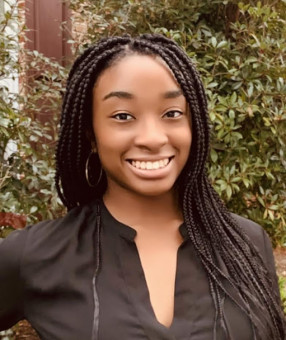
Name: Oluoma Iroajanma
From: Suwanee, Georgia
Votes: 0
When You’re in the
Driver’s Seat…
________________________________________
Life, as we know, is
both precious and delicately fragile.
Furthermore, life is
not a game that can be replayed. Thus, drivers should not treat it as
such by getting into the driver’s seat and maneuvering the vehicle
as if it’s a game of Mario Kart and any characters killed can be
regenerated.
Unfortunately,
whether intentional or unintentional, many drivers don’t seem to
understand the importance of knowing how to operate every necessary
part of a vehicle, or the importance of understanding what every sign
and signal means. This lack of understanding contributes greatly to
the amount of accidents that take place. This could possibly be due
to the perpetuation of a continuous cycle of under education in
driving concepts: parents who don’t know all the ins and outs of
driving (but who may think they do just because they received a
passing grade on their driving test) might decide to teach their kids
how to drive rather than taking them to official drivers ed
classes, and as a result a new generation of kids won’t always
necessarily have the same type of experience on the road that they
might receive at an official Drivers ed class.
To reduce accidents
that can occur as a result of lack of extensive driving experience,
official Drivers ed classes are extremely beneficial: a study
done by the University of Nebraska between 2003 and 2010 found that
Drivers ed significantly reduces both fatal crashes and
tickets: young drivers who don’t complete Drivers Ed are “75
percent more likely to get a traffic ticket, and 24 percent more
likely to be involved in a fatal accident (Shell, Newman).” What’s
more, an analysis conducted by AAA, the world’s largest motoring
club, found that “Drivers Ed reduces crash rates by nearly 4.3
percent and lowers the number of traffic tickets received by nearly
40 percent (Bigelow).”
Thus Drivers Ed is
extremely helpful for reducing crashes and associated deaths, and for
a variety of reasons: teen driver safety is the primary focus of
Drivers ed, and so teenagers receive more information on
how to stay safe than they likely would from their own parents (how
many parents can honestly say they talked to their child for thirty
hours about all the different laws and signs relating to driving
before letting them get behind the wheel?) Additionally, teens have a
tendency “to listen more to professionals than their own parents
(Kass),” making it more likely that they will retain long term
knowledge—such as valuable road skills and deep understanding of
the law—necessary to keep themselves, and in turn other drivers and
passengers, safe on the road.
In addition,
practice most certainly makes perfect, and Drivers Ed provides
extensive practice that parents most likely don’t provide if they
teach their kids themselves. Most Drivers Ed programs include the
necessary thirty hour class as well as anywhere between “6-10 hours
of driving lessons in the car (Kass)” with a certified instructor.
With that much practice under a Driver Ed completer’s belt, the
likelihood of crashing decreases.
Inexperience—whether
intentional or unintentional—accounts for many of the injury and
fatality causing accidents that take place. The experience and
knowledge offered through Drivers Ed helps to decrease the likelihood
of these accidents occurring.
Drivers Ed, however,
is just one of many ways to reduce the number of deaths related to
driving. Many other ways, and these are just a few, include:
–To always,
always wear your seat belt. Everyone is guilty of forgetting at
one point or another, but countless accidents occur every year where
victims would have survived had they strapped the seat belt on before
entering their vehicle.
–One drink is a
drink too many. It doesn’t matter how old or experienced you
are with driving: Even one drink causes a chemical effect on memory
by slowing down nerve communication in the hippocampus, which can
impair judgment as well as reaction time. If you know you are going
to drink, have someone else drive you, or call an Uber, Lyft, etc.
–Driving at night
limits your sight! If at all possible, if you haven’t perfected
driving during the day time, it is best to avoid driving at night,
given that it is harder to see.
–Be prepared for
icky weather situations and know what to do in them: Are you
aware that the road is the most dangerous shortly after rain begins?
If not, you need to make sure you understand when weather is
dangerous in case you find yourself in that type of situation.
–Understand the
ways of the road. Make sure you know when to yield, when you have
the right of way, etc. Merging at the wrong time causes multiple
crashes.
–Don’t rush
into anything; start small. If you haven’t practiced on the
road with an adult for multiple hours, you shouldn’t be going at
the maximum speed limit or jumping onto the highway when you don’t
have a lot of experience.
–If you just got
your license….those passenger rules exist for a reason. The
risk of a fatal crash increases when you are young and inexperienced,
and when you have additional passengers. If you’re a new driver,
make sure you are following these rules.
–The text is not
important! The Text. Is.Not.Important. If you are behind the
wheel, you could try keeping your phone tucked away in a bag or even
in the passenger seat behind you to avoid temptation to answer a
text. If it is really an emergency, pull over to the side of the
road and then respond to the text message.
-Make sure you
are always watching for pedestrians. Just because you have the
right of way doesn’t mean a naive kid or person isn’t walking or
playing in a dangerous area. Always be alert for kids!
–Always keep a
hand on the wheel—you never know when a crazy driver is going
to cut you off and you have to veer away quickly to avoid an
accident.
I have fortunately
never been in a serious car accident (and I pray it stays that way!)
But watching some students drive in and out of my high school is
truly something to behold at times; many students rush to get out of
the parking lot the second the afternoon bell ring before the more
reckless kids get to the lot, and for good reason: Kids speeding into
the school have collided right outside the school entrance coming
into the school in the morning, and there’s even been an incident
of a student smashing into a teachers car when backing out of the
parking lot. Accidents or near accidents are so common that whether
it has to do with lack of Drivers Ed or unchecked recklessness, a
teen driver getting into an accident at high school is no shocking
news.
If everyone makes a
purposeful decision to follow the steps listed above, as well as ones
that are not listed above, we are not only increasing our own safety,
but the safety of others. Taking actions like being cautious on the
road and monitoring all angles at all times, as well as being sure to
yield, cooperating with other drivers, being courteous and respectful
to other drivers by not cutting in front of people in a lane
randomly, informing a friend—no matter how much it will hurt their
feelings, of all the ways their driving might need some improvement,
etc, can help everyone drive in a safer environment and avoid causing
an accident that takes innocent, unnecessary life.
People disregard or
wing countless things when they are pressed for time: practicing for
presentations, coming up a thoughtful gift, etc. Driving should not
be one of those things. Life isn’t a game and therefore driving
shouldn’t be treated as one either. Speeding may seem fine…but
it’s not. You could cause an accident and/or take a life. Driving
more passengers than you should may seem fine…but it’s not. You
could cause an accident and/or take a life. Running a red light or
refusing to slow down during a yellow light might seem fine….but
it’s not! You could cause an accident and/or take a life. One wrong
mistake and subsequent accident can end an innocent person’s life
forever. Do not be a person that causes such an accident; If you do
treat driving like a game….approach it with caution and play it
carefully.
Works Cited (for the
statistics listed)
Bigelow, Pete. “Drivers Education Helps Reduce Teen Crash Rates.”
Autoblog, Verizon Media, 11 Sept. 2014,
www.autoblog.com/2014/09/11/aaa-drivers-ed-education-teen-car-accident/.
Duane Shell, and Ian Newman. “Study: Drivers Ed Significantly
Reduces Teen Crashes, Tickets.” Study: Drivers Ed Significantly
Reduces Teen Crashes, Tickets | News Releases | University of
Nebraska-Lincoln, University of Nebraska-Lincoln, 13 Aug. 2015,
newsroom.unl.edu/releases/2015/08/13/Study:+Driver’s+ed+significantly+reduces+teen+crashes,+tickets.
Kass, Jackie. “Concerned about Teen Driver Safety? Drivers Ed
Reduces Crash Risk.” Drive Smart Georgia, Drive Smart
Georgia, LLC., 10 Oct. 2017,
drivesmartgeorgia.com/blog/teen-driver-safety-drivers-ed-reduces-risk/.
