
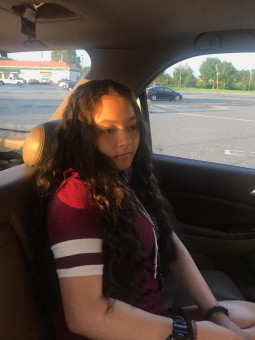
Name: Sarah Mojica
From: Bensalem, Pennsylvania
Votes: 0
Once
teenagers reach the age of fifteen, all we can think about is
learning how to drive and finally getting our permit the next year. I
should know, I’m also fifteen. However, what most teenagers don’t
realize is how much responsibility is required driving. It’s
important for teenagers to receive an adequate drivers ed
for some prior knowledge of driving responsibilities. A teenager
needs to commit to certain obligations when a car is involved, such
as knowing how to properly function the vehicle, following traffic
laws, respecting other drivers, being aware of surroundings to avoid
any accidents or tragedies, and making responsible choices involving
their vehicle – such as not choosing to text while driving.
Achieving
a drivers education significantly produces more safe drivers and
reduces the number of accidents and deaths involved in a vehicle.
Those who haven’t received a drivers ed or completed one
are more likely to be in a calamity. For example, drivers ed
teaches those to never drive under the influence of alcohol and to
have a designated driver if you plan on drinking. As the years pass
on, technology, the environment, and the community have been
improving and evolving, including the drivers ed. With a more
improved drivers ed, the better learners will absorb and follow
the information they’ve received, preventing casualties.
There
are multiple steps that can be taken to reduce the number of deaths
caused by driving. The first step that can be taken is to avoid
driving under the influence of alcohol or while on drugs. Another way
to avoid tragedies is to keep yourself away from distractions. For
example, no texting while driving or picking up phone calls. Also,
don’t get distracted by your passengers or your surroundings. There
are times when people are tempted to speed up when they’re running
behind, however, lots of collisions are caused by going over the
speed limit. So make sure to not drive over the speed limit. You can
also use this as a motivating factor to be on-time for appointments,
meetings, gatherings, etc.
Unfortunately,
I’m not able to say that I haven’t experienced being part of a
car accident. The vehicle that was driving behind me rear-ended me
causing damage to both our vehicles. I felt pain the next day and
until this day I still feel pain due to the accident. The driver who
caused the accident was being irresponsible by driving over the speed
limit, not being cautious or aware of their surroundings, and not
following the traffic laws.
There
are multiple easy and accommodating ways to become a better and safer
driver. Such as driving into traffic slowly, being vigilant of
red-light runners, observant of surroundings and pedestrians, no
tailgating, being cautious during poor weather, and maintaining radio
volume low.
-
Leisurely
drive into traffic: Look at every
direction to make sure it’s safe for you to move forward or turn.
It’s better to be safe than sorry; double or triple check before
you’re certain to move. Be aware of blind spots. Stop, glance, and
overhear. -
Vigilant
of red-light runners: Peer both
ways to know that no one is passing through a yellow light or
running over a red light. Once the light turns green, take a quick
pause to be sure that no one is speeding by. -
Observant
of surroundings and pedestrians: Be
extra cautious when driving by an area commonly known for children
or animals. Children at a young age are difficult to notice through
the rearview mirror, so be cautious. Also, when driving pay close
attention to the cars around you in case a driver abruptly stops,
swerves, or skids. -
No
tailgating: Avoid driving too
closely behind the vehicle in front of you. In case the vehicle in
front of you was to do a sudden movement, you would be able to think
quick on your feet and avoid any collision that could’ve been
possible. -
Cautious
during poor weather: It’s
important to be cautious when there’s poor weather outside, such
as rain, thunderstorms, snow, hail, fog, etc. If it were to rain,
thunderstorm, or snow, it would cause the roads to be slippery and
greatly increase the chance of your vehicle steering off course if
you were to drive rapidly. It could also cause a lack of visibility
and distractions. Most accidents occur during harsh weather
conditions. -
Maintaining
radio volume low: Having the radio
volume low would help you hear and be more aware of your
surroundings. For example, if you had the volume high, it would be
difficult to detect any emergency vehicles (such as an ambulance,
firetruck, police enforcement, etc.). It would also make it
difficult to hear the pedestrians in your surroundings or other
vehicles near you making a sudden stop, causing the car to screech.
Some
more extra helpful tips that could help others to become a better and
safer driver is to wear seatbelts, adjust mirrors correctly, have a
good grasp of the steering wheel, don’t be aggressive towards other
drivers, make sure that everything a part of the vehicle is working
properly, avoid driving while feeling exhausted or sick, and
attentive when the weather is dreadful. These fundamental rules once
practiced and prioritized, will not only ensure your safety on the
road but that of others.
