
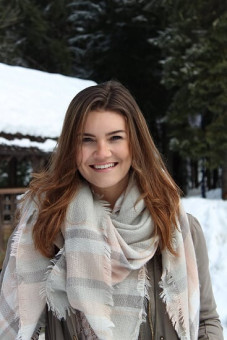
Name: Taylor Morrison
From: Castleton, Ontario
Votes: 0
My name is Taylor Morrison and I
am a fourth-year undergraduate from the University of British
Columbia. I am currently pursuing my dream of becoming a Medical
Geneticist by studying and applying to medical school. I feel honored
to be given the opportunity to apply for this scholarship for two
important reasons. The first being that by having a chance to share
my personal story, as well as my views on the current state of driver
education, I can help inspire others to learn about the impact of
unsafe driving. Secondly, this award will help me in an immeasurable
way to pursue my education and advance my career as a successful
healthcare professional.
For as long as I can remember, my
idea of who should receive drivers ed has been limited to
adolescents and new drivers just beginning their experience behind
the wheel. However, recently I have felt that it should be made
available to people of all ages and levels of driving. There is no
age limit for academic education, and drivers ed should be no
exception. This kind of education should be provided frequently
throughout one’s lifetime because with time and age, people
naturally fall into bad habits and lazy driving. This makes them a
hazard to both themselves and those around them. If people are
consistently reminded about road laws they were taught in their
preliminary drivers ed courses, it would enforce them to be
more cognizant about common driving errors and result in fewer
accidents. Along with regular refreshers, following safety laws such
as wearing a seat belt, defensive driving, and eliminating
distractions will reduce one’s chances for an accident. Although
these preventatives are the most common, there are others such as
making sure you have enough sleep and not listening to music too
loudly. These precautions are often overlooked compared to other
driving habits like driving sober, one of which that has had the
greatest impact on my life.
When I was just 10 months old, my
mom and I were in a head on collision with a drunk driver at 9:30 am
on April 24, 1999. The impact of the crash on my mom was not only
physical (via shattering her ankle, breaking her sternum and hitting
her face on the steering wheel) but also emotionally, mentally, and
financially damaging. As for me, I received whiplash and some mild
bruising from the straps of my car seat that had been moved to the
back seat of the car only a week prior. Had it not been, I would have
received fatal injuries as a result of the vehicle demolishing the
front passenger side of the vehicle. The long-term trauma that has
been inflicted on my family was at a magnitude that the drunk driver
will never know, let alone understand. A single mistake that he made
in the course of only a morning has had consequences that still
resonates in my family’s life to this day, 21 years later.
Despite the physical pain that my
mom still experiences daily, I consider us the lucky ones. The
National Safety Council estimates that in 2018 alone, 40,000 people
in the US died as a result of car accidents, making this the third
consecutive year of at least 40,000 victims. Although I am not naive
to the fact that “accidents happen”, this number astonishes me as
there are many reasons for it being so high. The World Health
Organization states that using a phone while driving makes one 4
times more likely to be in an accident, and that a 1% speed increase
will result in a 3% increased risk of a serious crash, and a 4%
increase of a fatal one. Even so, as
pervasive as these two problems are, phone usage and speeding only
account for a small fraction of the 40,000 deaths that plague the US
annually. Other reasons such as drug-driving, lack of seatbelts, and
fatigue all contribute towards this staggeringly high number.
After writing this application, I
have reflected on my own driving skills and recognize that I too can
do my part to ensure I am a good driver by getting rid of any
potential distractions. I can also encourage others to be proactive
drivers by being aware of their driving habits and exemplifying safe
driving skills. I hope that my story and outlook on universal drivers
education has helped others to take their driving more seriously and
understand the importance of their actions on others lives.
