
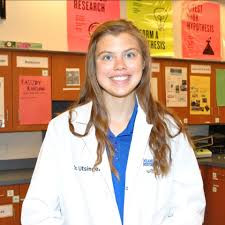
Name: Zoe Utsinger
From: West Alexandria, Ohio
Votes: 0
Utsinger
2
Driving
and operating a vehicle is a part of everyday life for most people.
It is a privilege, yet in a modern society has become a common means
of transportation. However, due to the prominence of vehicular
operation, people have started to forget the serious risks involved
with operating these motor vehicles.
I
remember a near death experience that I had while on the interstate.
My mom was behind the wheel; I was in the passenger seat, and my
younger sister was in the backseat. It started raining, not extremely
heavily, but we began to hydroplane. There was no puddling of water
on the road and speed was not a factor in the incident, even still,
my mom’s gray Chevy Traverse spun uncontrollably across three lanes
of traffic, while miraculously stopping parallel to the meridian. In
an instant, fear swept over us along with a feeling of helplessness.
There was nothing we could do. Come to find out, my parents had been
putting off getting new tires. The tire tread had been worn
paper-thin.
Now
having this terrifying personal experience, I was able to make
connections between how driving safety is taught in school and how
efficiently the information is actually retained later in life.
Driving school is informative and has an effective curriculum in
helping teenagers understand the rules of the road. The content was
clear about consequences that could happen from neglecting to follow
these rules. However, the information is presented dryly with lots of
statistics. While these numbers, such as annual number of deaths
caused by driving, may be important for kids to know, they are easy
to forget. To prevent this, I suggest integrating real life stories
about car accidents, keeping the victims anonymous, to create an
emotional appeal. An emotional tactic like this models one of
Aristotle’s artistic proofs, pathos. Pathos is a form of persuasion
where the persuader targets the audience’s emotions. In this
instance, the driving schools are trying to get the students to
sympathize with the accident victims. The students will feel
vicariously experience the sadness of the situation, which will evoke
a more memorable lesson. By putting faces to numbers, kids are more
likely to think twice about making poor driving decisions.
